You are not a machine …
… but the metaphor runs approximately 400 years deep, sitting alongside the industrial revolution, the commitment to a dominant materialist paradigm and technological developments that value the power of the machine. Over the years, the infinitely complex systems of the human ecosystem have been understood as matter, stripped to parts and severed from wholeness through the metaphor of a mechanical body.
How often have you heard your heart referred to as a pump? Your joints as mechanical levers? Or your brain as the central switchboard?
This blog shares ideas from Joanne Avison’s brilliant work ‘Myofascial Magic in Action’ - an exploration into the self-forming expressive wholeness of the human experience, as understood through a reclaiming of our understanding of fascia, or connective tissue.
From my experience as a yoga practitioner, being in a body feels far more magical and mystical than it does mechanical. My challenge as a teacher is to find the language to share this experience with my students.
Body as machine
Metaphors are an expressive language tool, used to shift an idea into a lived experience. They are not literal, rather they are representative. However, the choice of metaphor can impact the ways in which we experience the world.
The metaphor of the body as machine sits in line with industrial development, when the machine was seen as the tool of efficiency and the answer to capitalist growth.
To understand the body like the machine is to escape the messiness of our form. To mechanise our language around the body meant an absolute answer to the question of purpose. A machine is objective, programmed and predictable, unlike the experience of being human.
A machine is an apparatus that uses mechanical power, consisting of individual parts that are put together with a particular function. Although us humans absolutely have ‘parts’ (systems, organs and bones of all shapes and sizes formed through a process of differentiation) we are also consistently and completely whole at all times. Unlike the machine, we formed ourselves into the world! All beginning from the whole, rounded potential of the single egg. And we continue to shape shift, forming ourselves in a performance of expression through every moment of every day.
“Humans begin whole - even as unicellular beings. Unlike a watch, living humans simply (and complexly) create the parts within the whole, stage by stage, within the body space, over time.”
Avison goes on to describe our form beautifully as ‘bio-origami’ … folding, unfolding and shape shifting from a single sheet.
This very same gesture of unfolding is expressed in non-dual Tantrik philosophy through Kṣemarāja’s 1000 year old text, The Recognition Sutras.
‘Through her own Will, Awareness unfolds the universe on the ‘canvas’ that is Herself.’
Here, we sense that the human form is a microcosm of the macrocosm. It is a direct expression of life itself - in all its wild, tumbling, messy, porous unfoldings. We are creative self expression with far more in common than the moon and the tides than a mechanical device.
The power of metaphor
Metaphor carries us from an idea to an embodied experience. Metaphors are what we become, often in a non cognitive, but quietly powerful way.
Humans are animated, fluid and changing. What if we chose to describe ourselves using metaphors that expressed that?
Here’s a selection of very un-machine like metaphors that I’ve been offered from my teachers and explored in my own classes:
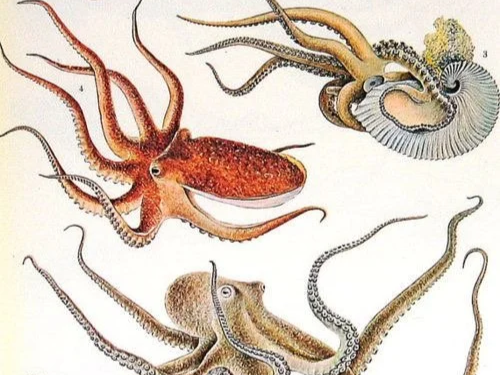
Image from Pinterest
1. Octopus heart
Consider the heart not just as the ‘in and out’ four-chambered organ we studied in biology at school, but as the body wide circulatory system. When we map the whole-body-heart in this way, at its centre lies its two atriums and two ventricles through which all blood flows to and from in a figure of eight pattern. From this centre, a web of increasingly fine arteries, veins and capillaries reach to the periphery of the body. If we saw the circulatory system in isolation, we would have a very clear picture of the shape of the whole body. It is all encompassing.
Like the octopus, this system communicates through its centre. It’s fluid and it’s changeable. It is relational to its environment in the body (the organ system, the web of fascia, the muscular-skeletal system) in the same way the octopus is relational to its underwater world (the sea, the bed, other organisms).
We can sense this whole-body octopus heart just by bringing awareness to our own pulse as a dynamic, experiential rhythm felt continuously through the limbs and the centre. Very octopus-like..
2. Spinal river bed
The bony articulation of spinal vertebra forms a winding river bed, through which cerebral spinal fluid and our central nervous system flow. It is directional and it is co-creative.
Moving from a river-like axis encourages communicative flow. I’ll often sense each vertebra nudging the next, acknowledging the points where the flow may feel sticky or challenging and the points that feel slidy and spacious, in the same way the river negotiates its course through obstacles and rocky outcrops as well as smooth, wide flood plains.
‘There is a current of love-energy that flows
Between Earth below and Sun above.
The central channel of your spine is the riverbed.
The streaming is as delicate and powerful as the tingling touch of lovers.
Entering here,
Radiance arches between above and below.
Your whole attention resting in the subtle, Vibrating in the center of the spinal column,
Tracing this current between Earth and Sun,
Become magnetism relating all the worlds.’
The Radiance Sutras : 112 gateways to the yoga of wonder and delight by Lorin Roche
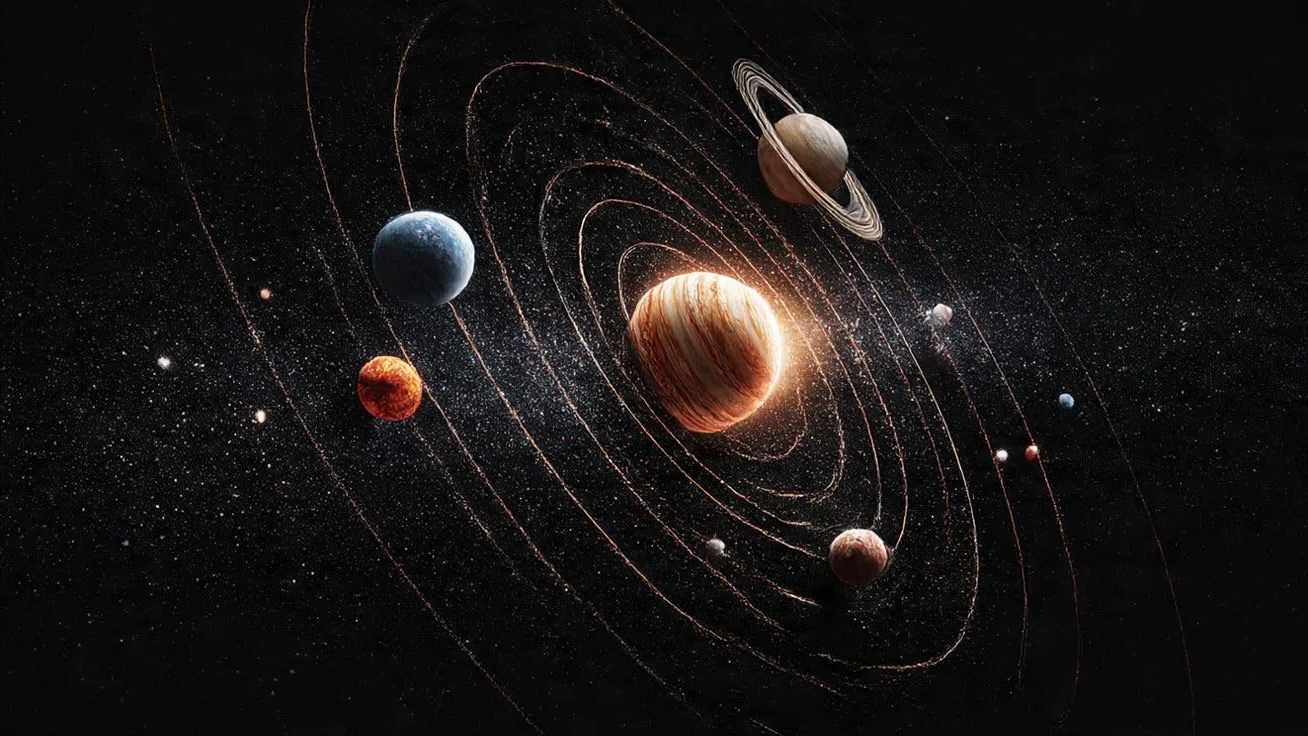
Image from Pinterest
3. Inner Planetary Solar System
Can you sense your inner orbit?
I’ve been considering the head, ribs and pelvis like three planets in a complimentary and communicative inner-orbit. These three centres are contained in skeletal roundness, rubbly and variable just like a planet’s surface. Inside, they are fluid, containing multiple textures, densities, temperatures and movement potential. This inner movement is hidden from the eye but is essential to our sense of groundedness.
And much like the solar system, the body is self-forming, in complex relationship and also endlessly mysterious and wonderful.
-
Before we built machines, we related ourselves to the natural environment we exist within. What if we used our practice not to become a programmed coordination of levers, pulleys and pumps but instead to embody the way pebbles are carried through the river's current or the way a leaf dapples shades of sunlight? What if we used our practice to embody the clay, the moss or the mist?
How could this inform not just the way we experience the human body, but our broader relationship of give and take within the natural world?
“I come here to listen, to nestle in the curve of the roots in a soft hollow of pine needles, to lean my bones against the column of white pine, to turn off the voice in my head until I can hear the voices outside of it: the shhh of wind in needles, water trickling over rock, nuthatch tapping, chipmunks digging, beechnut falling, mosquito in my ear, and something more - something that is not me, for which we have no language, the wordless being of others in which we are never alone. After the drumbeat of my mother’s heart, this was my first language.”
Robin Wall Kimmerer in Braiding Sweetgrass